

What is the coating thickness range of a Uv Curtain Coater?
As a supplier of UV Curtain Coaters, I've encountered numerous inquiries regarding the coating thickness range achievable with these remarkable machines. Understanding this aspect is crucial for various industries, from woodworking to printing, as it directly impacts the quality, durability, and appearance of the coated products. In this blog post, I'll delve into the factors influencing the coating thickness range of a UV Curtain Coater and provide insights into optimizing this parameter for your specific applications.
Factors Affecting Coating Thickness
Before discussing the coating thickness range, it's essential to understand the key factors that influence it. These factors can be broadly categorized into machine-related and material-related aspects.
Machine-Related Factors
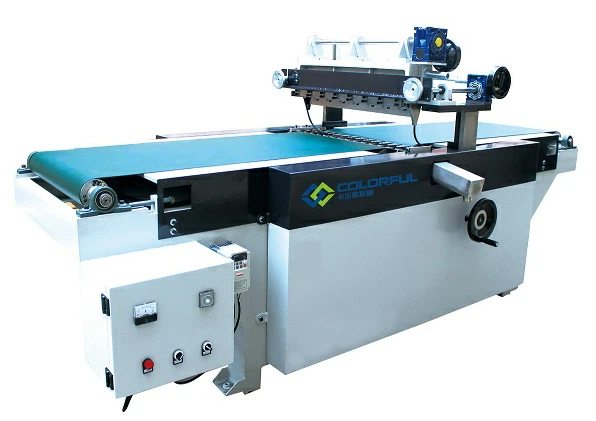
- Curtain Flow Rate: The flow rate of the coating material through the curtain former is a primary determinant of the coating thickness. A higher flow rate generally results in a thicker coating, while a lower flow rate produces a thinner one. Modern UV Curtain Coaters UV Curtain Coater are equipped with precise flow control systems that allow operators to adjust the flow rate accurately.
- Conveyor Speed: The speed at which the substrate passes through the curtain of coating material also affects the coating thickness. A slower conveyor speed allows more coating material to be deposited on the substrate, resulting in a thicker coating. Conversely, a faster conveyor speed leads to a thinner coating.
- Curtain Height and Width: The height and width of the curtain of coating material can influence the coating thickness distribution. A taller and wider curtain may provide more uniform coverage but could also result in a thinner overall coating. Adjusting these parameters can help achieve the desired coating thickness and coverage.
Material-Related Factors
- Viscosity of the Coating Material: The viscosity of the coating material plays a significant role in determining the coating thickness. Higher viscosity materials tend to form thicker coatings, while lower viscosity materials result in thinner coatings. It's important to select a coating material with the appropriate viscosity for your specific application and adjust the machine settings accordingly.
- Surface Tension of the Coating Material: The surface tension of the coating material affects its ability to spread evenly on the substrate. A coating material with high surface tension may form droplets or uneven coatings, while a material with low surface tension can spread more easily, resulting in a more uniform coating thickness.
- Substrate Characteristics: The surface roughness, porosity, and absorbency of the substrate can also impact the coating thickness. Rough or porous substrates may absorb more coating material, resulting in a thicker coating, while smooth and non-porous substrates may require less coating material.
Typical Coating Thickness Range
The coating thickness range achievable with a UV Curtain Coater can vary depending on the factors mentioned above. In general, the coating thickness can range from as thin as 5 microns to as thick as 200 microns or more. However, most applications typically require coating thicknesses in the range of 10 to 100 microns.
- Thin Coatings (5 - 20 microns): Thin coatings are often used for applications where a minimal amount of coating material is required, such as for enhancing the appearance of a product or providing a protective barrier. Examples include thin film coatings on electronic devices, optical lenses, and printed materials.
- Medium Coatings (20 - 50 microns): Medium coatings are commonly used in a wide range of applications, including furniture finishing, automotive parts coating, and packaging. These coatings provide a good balance between protection, durability, and appearance.
- Thick Coatings (50 - 200+ microns): Thick coatings are typically used for applications where maximum protection and durability are required, such as for industrial equipment, marine applications, and heavy-duty machinery. These coatings can provide excellent resistance to abrasion, corrosion, and chemical exposure.
Optimizing Coating Thickness
To achieve the desired coating thickness and quality, it's important to optimize the machine settings and coating material properties. Here are some tips to help you optimize the coating thickness:
- Conduct Test Runs: Before starting a production run, it's recommended to conduct test runs using different machine settings and coating materials to determine the optimal combination for your specific application. This will help you achieve the desired coating thickness, coverage, and appearance.
- Monitor and Adjust Machine Settings: Continuously monitor the machine settings, such as the curtain flow rate, conveyor speed, and curtain height, during the production process. Make adjustments as needed to ensure consistent coating thickness and quality.
- Control the Coating Material Properties: Ensure that the coating material has the appropriate viscosity, surface tension, and other properties for your specific application. You may need to adjust the coating material formulation or use additives to achieve the desired properties.
- Maintain the Machine: Regularly maintain the UV Curtain Coater to ensure its proper functioning. This includes cleaning the curtain former, checking the flow control systems, and lubricating the moving parts. A well-maintained machine will provide more consistent coating results.
Conclusion
The coating thickness range of a UV Curtain Coater can vary depending on several factors, including machine settings, coating material properties, and substrate characteristics. By understanding these factors and optimizing the machine settings and coating material properties, you can achieve the desired coating thickness and quality for your specific application.
If you're interested in learning more about UV Curtain Coaters or have specific requirements for your coating application, I encourage you to contact us for a consultation. Our team of experts can provide you with detailed information and guidance on selecting the right UV Curtain Coater and optimizing the coating process for your needs.
References
- "Coating Technology Handbook" by P. K. T. Oldring
- "UV and EB Curing Formulations for Printing Inks, Coatings and Paints" by P. K. T. Oldring
- Manufacturer's manuals and technical documentation for UV Curtain Coaters